Deutsch
 English
 Chinese
Delegation from Taras Shevchenko National University of Kyiv Visits Clausthal University of Technology for Specialized Academic Workshop
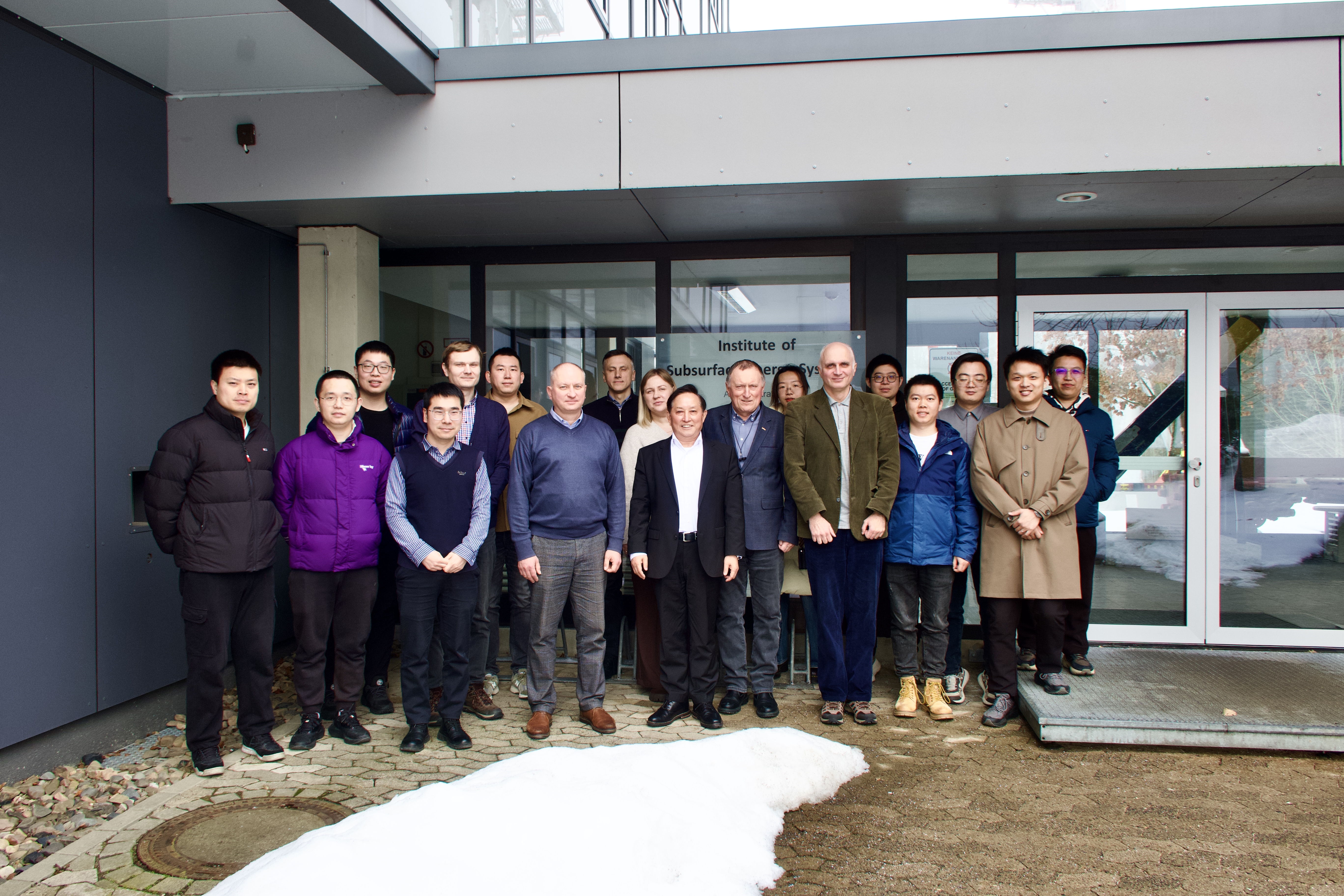
Supported by the EU research project “Localization in Geophysics, Geohazards and Geoengineering (LOC3G)”, a 6-member delegation from Taras Shevchenko National University of Kyiv, Ukraine, has been visiting Clausthal University of Technology, Germany for one-month bis end of February 2026. On February 6, 2026, the two institutions jointly held a specialized academic workshop, engaging in systematic exchanges and in-depth discussions on frontier topics in geosciences, subsurface energy systems, and low-carbon technological innovation.
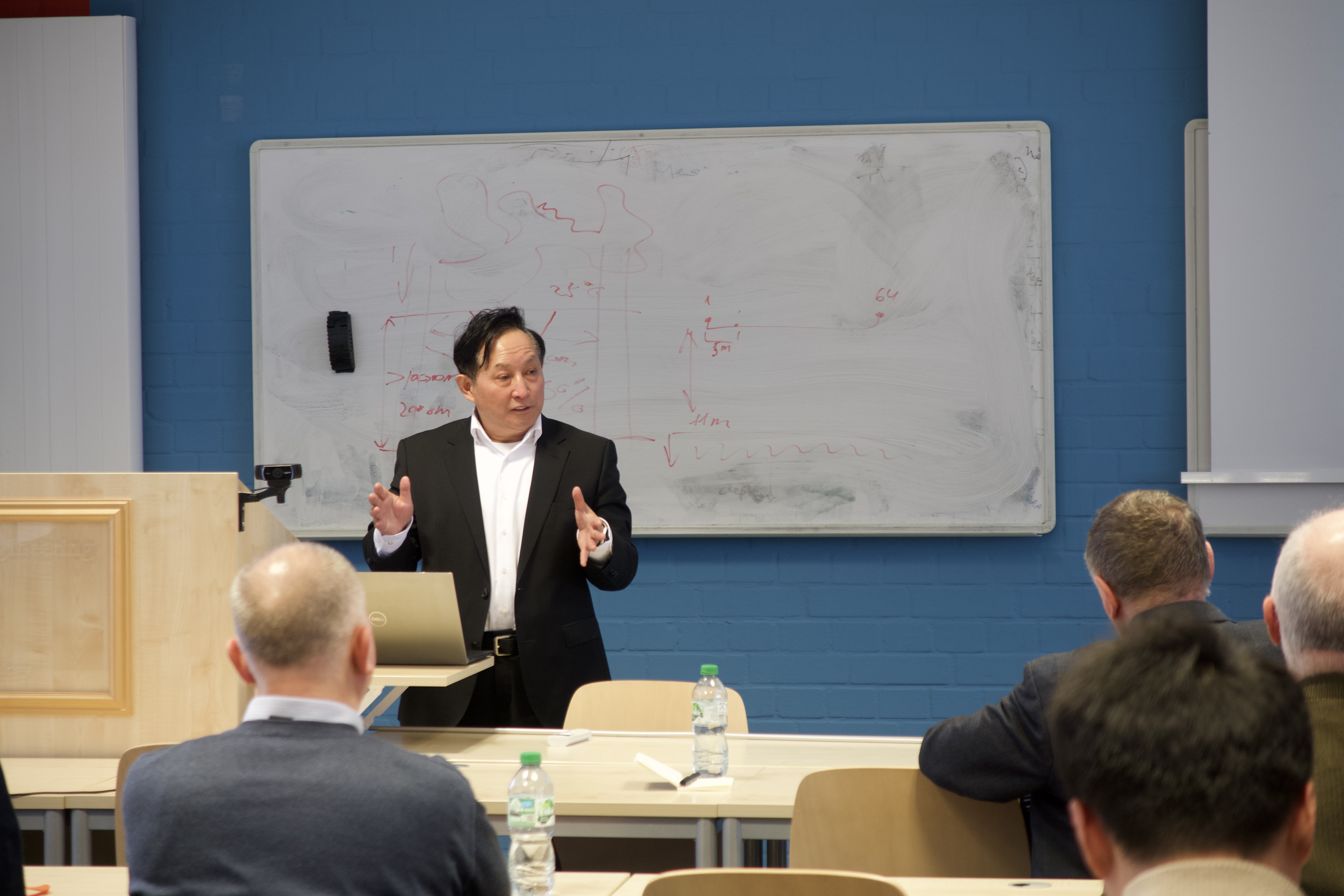
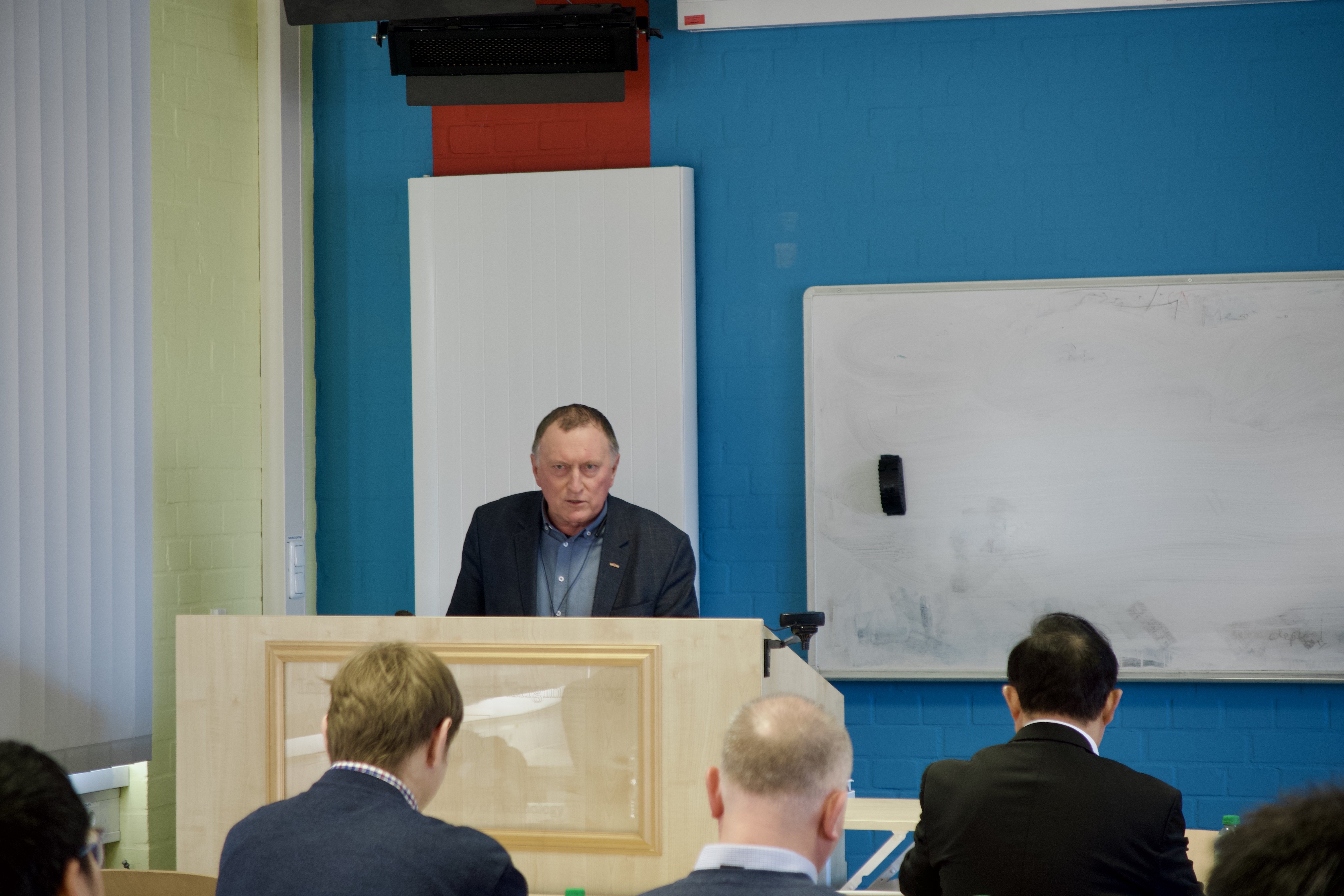
The workshop was chaired by Professor Michael Zhengmeng Hou from the Institute of Subsurface Energy Systems at Clausthal University of Technology. In his opening remarks, Professor Hou warmly welcomed the delegation and provided a comprehensive overview of the research background and overall objectives of the LOC3G project. He emphasized that amid profound global energy restructuring and escalating climate challenges, the development of subsurface energy systems, carbon sequestration, and the coordinated integration of renewable energy have become key issues in international scientific collaboration. Strengthening collaborative innovation between universities and research institutions across countries not only facilitates breakthroughs in core technologies but also establishes a high-level platform for training young researchers and jointly applying for research projects. Professor Hou expressed his hope that this workshop would serve as a new starting point for deepening substantive cooperation in subsurface energy development, geotechnical engineering safety, and low-carbon technologies, and for jointly exploring sustainable pathways for the future.
The morning session highlighted systematic research achievements of Taras Shevchenko National University of Kyiv in rock physics, regional tectonics, and geological hazards, spanning from laboratory-scale investigations to regional geology and engineering applications.
Professor Serhii Vyzhva first introduced the research framework of the Measurement (Rock Physics) Laboratory at the Faculty of Geology. The team employs an integrated approach combining petrography, geochemistry, geophysics, and micropaleontology to conduct multi-scale analyses of various rock types. Microscopic and electron probe techniques are used for quantitative characterization of mineral composition and microstructures. In conjunction with X-ray fluorescence (XRF) and X-ray diffraction (XRD) analyses, the laboratory systematically investigates rock matrix composition and trace element distribution. Furthermore, physical models addressing key reservoir parameters—such as elastic anisotropy, porosity, and permeability—have been established to support reservoir fluid prediction and mechanical property evaluation.
Dr. Oleksandr Shabatura reviewed the university’s continuous development in rock physics research since the 1950s and presented recent findings on conventional and unconventional hydrocarbon reservoirs in Ukraine. Based on systematic core sample analyses from the Carpathian Foredeep and the Outer Carpathians, the team examined reservoir physical properties as well as electrical and acoustic characteristics under different lithological conditions. Concerning CO₂ geological sequestration, experimental results revealed that CO₂–rock interactions may induce mineral precipitation and pore clogging, providing critical data for site selection and risk assessment.
Associate Professor Dmytro Kravchenko analyzed the thrust tectonic system of the Carpathian region, explaining the controlling mechanisms of thrust–fold deformation during the Alpine orogeny. Through integrated structural geology and geomorphological studies, the team identified principal compressive stress orientations and late-stage deformation features, validated by field-based fold axis statistical analysis and geodynamic mapping techniques.
Assistant Professor Kateryna Hadiatska focused on gravitational geological processes such as landslides. By establishing a multi-factor spatial modeling framework and regional hazard assessment system, the research enabled localized prediction of major landslide bodies, providing technical support for infrastructure safety and disaster risk mitigation.
Concluding the morning session, Associate Professor Mykola Lavrenyuk introduced intelligent computational methods into geological hazard prediction. By applying physics-informed neural networks to numerical simulations of heterogeneous elastic bodies, the research achieved high-precision inversion of stress–strain fields, offering new methodological pathways for integrating machine learning into geotechnical engineering. The morning agenda thus formed a coherent research chain spanning experimental rock physics, regional tectonics, and intelligent predictive modeling.
The afternoon session shifted focus toward energy resource development, intelligent energy systems, and carbon reduction technologies, expanding from terrestrial geology to marine systems, subsurface energy storage, and digitalized energy management.
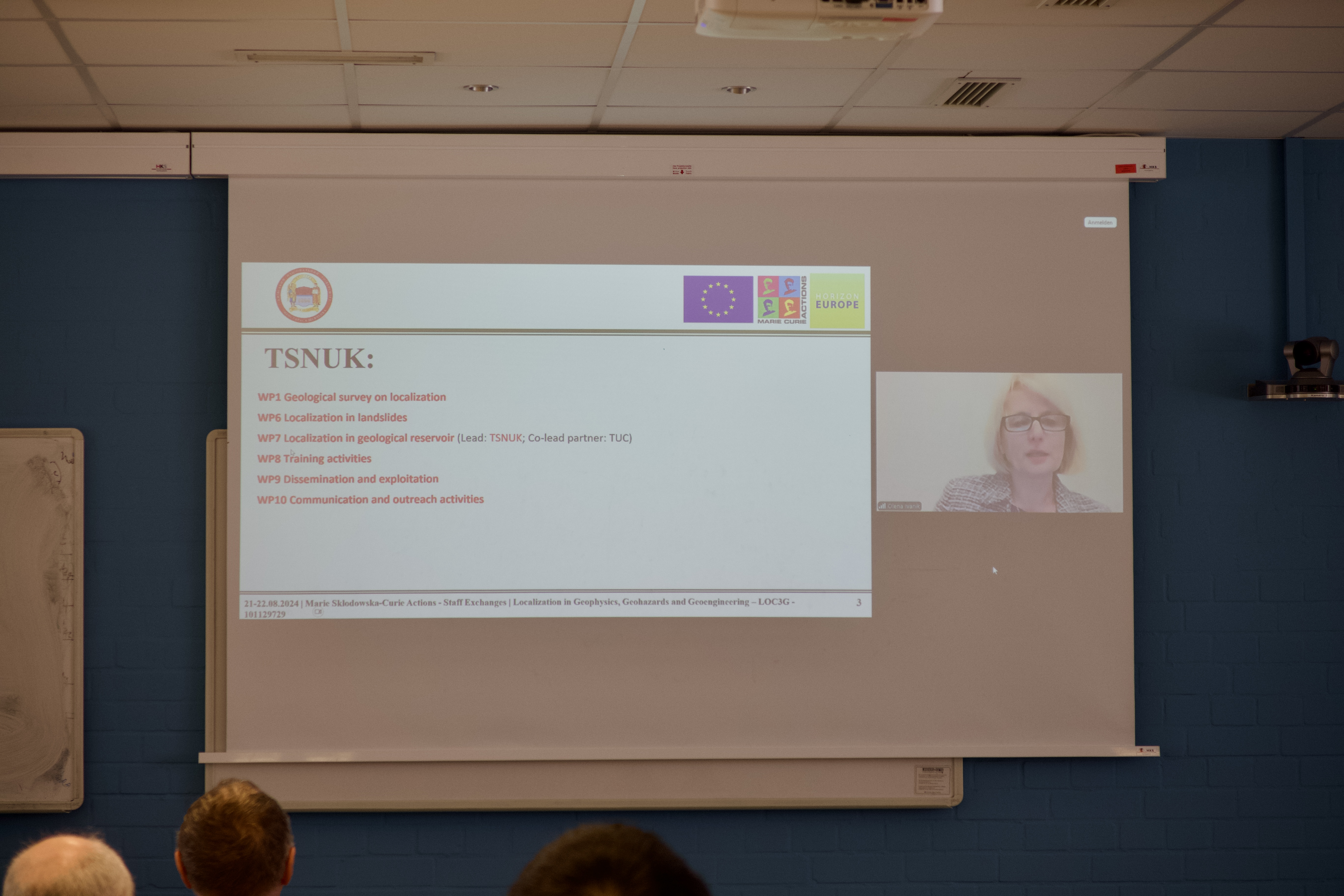
Ms. Professor Olena Ivanik presented research on modeling the spatial distribution of natural gas hydrates in the Black Sea. By integrating geological, structural, and marine environmental data into a multi-factor spatial database and applying GIS-based weighted analysis, the team identified potential hydrate-enriched zones. The results demonstrated significant correlations between hydrate occurrence and continental slope morphology, active faults, and mud volcano systems, providing scientific support for resource assessment and offshore geohazard evaluation.
Ph.D. candidate Ye Yue from the Institute of Subsurface Energy Systems introduced a machine learning–based method for real-time rate of penetration (ROP) prediction and optimization. A multivariate drilling database was constructed, incorporating sequence autoencoders for anomaly detection and optimization algorithms to enhance BP neural network performance. The developed real-time prediction and optimization platform enables intelligent drilling parameter adjustment under well control and equipment constraints, offering decision support for geothermal and subsurface energy drilling operations.
Ph.D. candidate Qichen Wang focused on the development of smart grids and modern power systems in Germany, systematically analyzing electricity market mechanisms under high penetration of renewable energy. By constructing multivariate time-series models and incorporating attention mechanisms to improve prediction accuracy, the research provides methodological support for electricity price forecasting and market trading decisions, demonstrating the interdisciplinary integration of energy systems and computational science.
Postdoctoral researcher Lin Wu presented research on underground biomethanation (UBM) and the CCCUS technology framework. He noted that amid continuously rising global CO₂ emissions, a single sequestration approach is insufficient to meet the dual challenges of deep emission reductions and energy system transformation. CCCUS (Carbon Capture, Circular Utilization and Sequestration) emphasizes promoting carbon resource circularity while achieving geological storage, transforming CO₂ from an “end-of-pipe emission” into a valuable energy feedstock. The underground biomethanation approach involves injecting CO₂ and H₂ into depleted oil and gas reservoirs, where indigenous methanogenic microorganisms convert them into renewable CH₄. This process couples “power-to-CH₄” technology with large-scale subsurface energy storage. Field experiments and high-temperature, high-pressure laboratory tests demonstrated that CO₂ conversion rates can reach very high levels under suitable conditions. Numerical simulations coupling multiphase transport, microbial kinetics, and geochemical reactions further validated the technical feasibility. Notably, bio-heat generated during methanogenesis can increase reservoir temperature, creating synergy with geothermal energy development and highlighting the integrated potential of multifunctional subsurface energy systems. The research confirms high conversion efficiency and proposes a systematic site-selection framework, providing innovative solutions for carbon circular utilization and subsurface energy storage integration.
Ph.D. candidate Nan Cai investigated the synergistic mechanism of CO₂ sequestration and natural gas hydrate exploitation. By combining molecular dynamics simulations with experimental analysis, the study explored the dual controlling mechanisms of decomposition and diffusion during CO₂–CH₄ replacement processes. The research proposes optimized injection gas ratios and temperature–pressure conditions, offering theoretical support for low-carbon hydrate development and long-term storage safety assessment.
In the concluding session, Prof. Hou delivered a keynote lecture entitled “Numerical Investigations on Innovative Frac-Technologies for Unconventional and Geothermal Reservoirs,” systematically addressing key technical challenges in complex reservoir stimulation and deep geothermal development. To mitigate water-lock effects and clay swelling in tight gas reservoirs that reduce permeability, Professor Hou’s team developed a multiphase, multicomponent fluid flow model and systematically validated non-water-based fracturing fluids, such as n-heptane-based systems. These alternatives effectively reduce reservoir damage and enhance gas well productivity. In geothermal energy development, his team employed a self-developed thermo–hydro–mechanical (THM) fully coupled numerical simulator to analyze induced seismicity mechanisms in Enhanced Geothermal Systems (EGS). The proposed Cyclic Soft Stimulation (CSS) technique utilizes periodic water injection to induce micro-scale shear slip and rock damage, activating natural fracture networks while mitigating seismic risks. Furthermore, quantitative analyses of stress shadow effects during multi-stage hydraulic fracturing were conducted, leading to optimized perforation cluster spacing and fracture layout strategies. Supported by digital twin concepts, the research enables comprehensive numerical forecasting and risk assessment throughout the reservoir stimulation process, significantly reducing field trial-and-error costs and providing robust theoretical and engineering guidance for efficient unconventional hydrocarbon development and sustainable deep geothermal utilization.
The workshop was rich in content and intensive in academic exchange, encompassing fundamental geoscience research, energy engineering technologies, and low-carbon system innovation. It fully demonstrated the complementary strengths and strong cooperation potential of both institutions in subsurface energy systems and carbon reduction technologies. Relying on the LOG3G project platform, the two sides will further strengthen research collaboration and academic exchange, jointly advancing innovation in subsurface energy systems and sustainable development technologies.