
 Deutsch
 English
 Chinese
EFZN Funds TU Clausthal Project: Resilient Inland Shipping in Lower Saxony
The Energy Research Centre of Lower Saxony (efzn) is funding a TU Clausthal project aimed at strengthening the resilience and crisis preparedness of Lower Saxony’s energy system.
Whether caused by extreme weather events, accidents or attacks, energy supply systems are increasingly exposed to disruptions that are becoming ever more difficult to predict or prevent. Lower Saxony therefore urgently needs resilient systems that can continue to function effectively during crises.
Through its second Lower Saxony funding program for small, agile projects, the efzn Executive Board seeks to strengthen interdisciplinary research and develop robust courses of action for state policymakers. Researchers across Lower Saxony were therefore invited to propose solutions for enhancing the “crisis preparedness of Lower Saxony’s energy system.” As part of this call, the Energy Research Centre of Lower Saxony is now funding five projects, including one led by TU Clausthal.
“The fact that the Energy Research Centre of Lower Saxony has selected our project is a valuable recognition of TU Clausthal’s research strength,” says TU Clausthal President and member of the efzn Supervisory Board Dr.-Ing. Sylvia Schattauer. “The project is an excellent example of how our university combines forward-looking questions concerning energy supply with concrete solutions.”
TU Clausthal Advances Crisis-Resilient Energy Supply
The project “Resilient Inland Shipping in Lower Saxony” is led by Prof. Michael Z. Hou of TU Clausthal’s Energy Conversion and Storage research area. Its objective is to enhance the crisis resilience of Lower Saxony’s energy system through a supply concept supported by inland shipping.
More specifically, the project systematically integrates port infrastructure, ship propulsion systems, hydrogen and Power-to-X systems, geothermal electricity and heat generation, underground storage facilities, and digital control approaches. Inland shipping is regarded as an integral part of the regional energy infrastructure. In crisis situations, it could support energy transport, mobile energy storage and emergency supply, while also enabling the rapid reconfiguration of the energy system.
“I am delighted that we have been entrusted with this project. My team has already begun redefining the role of inland shipping, port infrastructure and integrated energy systems in crisis situations, and developing concrete recommendations for Lower Saxony that incorporate scientific research findings,” says Prof. Hou.
“A particularly important aspect is the intelligent interconnection of existing infrastructure, which can strengthen both security of supply and the capacity to act during crises. This is precisely what TU Clausthal stands for: interdisciplinary research that combines scientific depth with responsibility for the region, the state and society,” adds TU Clausthal President Schattauer.
Strong Interest in the Topic
“The strong response to our call for proposals underlines the high level of responsibility demonstrated by the applicants in strengthening the crisis preparedness of Lower Saxony’s energy system,” says Prof. Sebastian Lehnhoff, spokesperson for the efzn Executive Board.
Funding is limited to a maximum period of six months. The projects will run from August 1, 2026, to January 31, 2027. More detailed information about the projects is available on the efzn website.
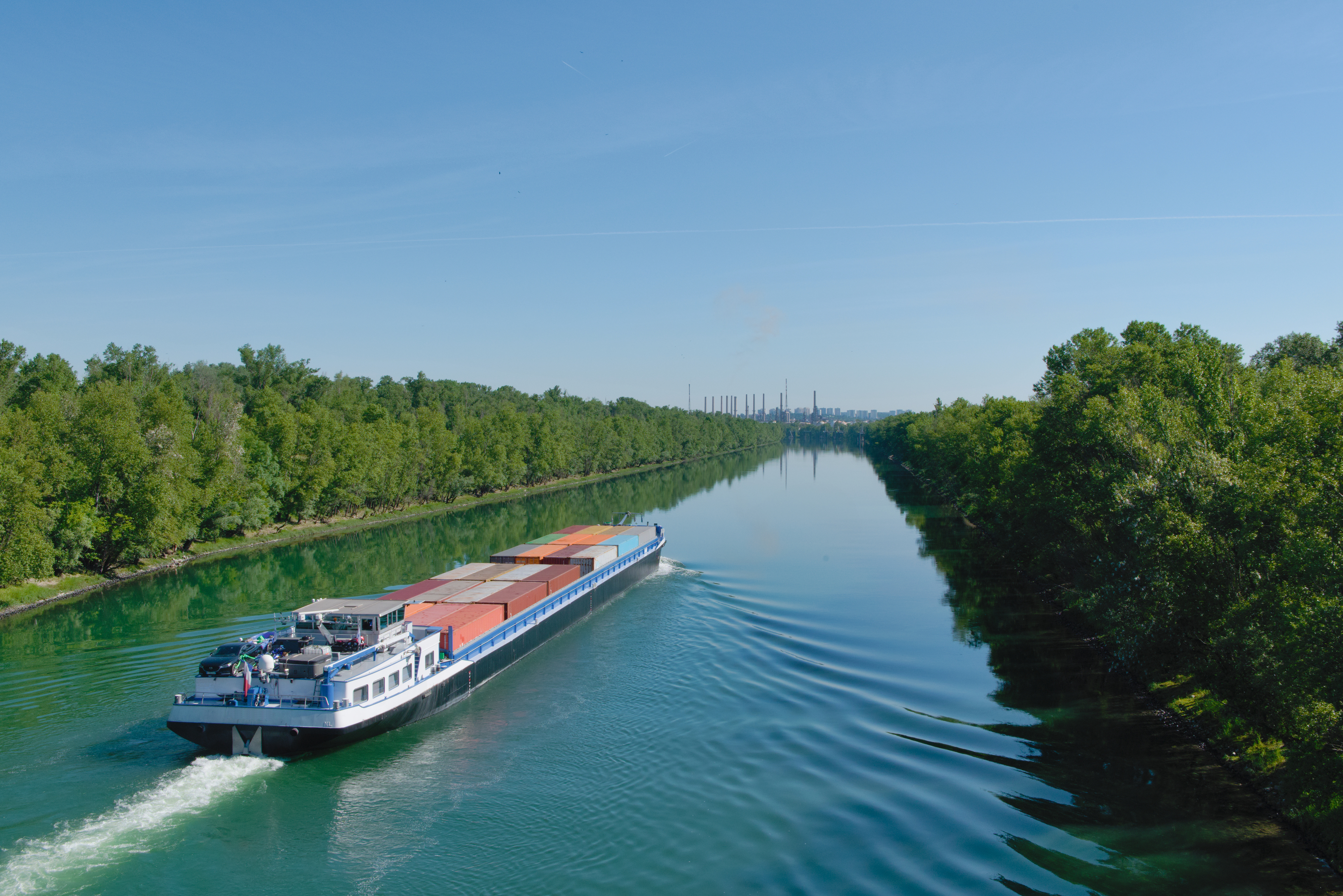
To enhance the crisis resilience of Lower Saxony’s energy system, TU Clausthal is developing an inland-shipping-based supply concept. The project, led by Prof. Michael Z. Hou, is funded by the Energy Research Centre of Lower Saxony (EFZN). Photo: Adobe Stock